Gas stoves are an integral part of modern kitchens, offering convenience, efficiency, and precise control over cooking. However, these appliances also carry inherent risks due to the flammable nature of the gases they use, such as propane, butane, or natural gas. A gas leak in your stove can lead to severe hazards, including fire, explosions, or health complications. This makes stove gas leakage detection and repair a critical concern for every household.
This article provides a detailed guide on identifying, preventing, and repairing gas leaks in stoves. Understanding these steps ensures safety and prolongs the lifespan of your appliances.
Understanding Gas Leaks in Stoves
Gas leaks occur when gas escapes from its designated pathway due to faulty connections, worn-out components, or poor maintenance. Even a minor leak can cause significant safety hazards over time. Common causes include aging or damaged gas pipes that can corrode or crack, loose connections caused by improper installation or vibrations, faulty burners or valves that fail to close properly, and general wear and tear from continuous use. Recognizing these causes helps in taking preventive measures and reduces the risk of accidents.
The Importance of Gas Leakage Detection
Detecting stove gas leaks early is crucial, as gas leaks not only pose immediate fire hazards but also impact health. Inhaling gas over time can lead to headaches, nausea, dizziness, or respiratory issues. Early detection allows homeowners to prevent potential explosions or fires, save on wasted gas, ensure the stove operates efficiently, and maintain a safe kitchen environment. Professional detection services use advanced tools and techniques that ensure even the smallest leaks are identified and resolved quickly.
Methods for Detecting Gas Leaks
Visual inspection is often the first step in detecting gas leaks. By closely examining the stove, pipelines, and connections, it is possible to notice rust, corrosion, discoloration, loose fittings, or signs of wear. While this method can reveal obvious issues, hidden leaks may still require professional tools for detection.
Another common method is the smell test. Gas used in homes contains a distinct odor due to chemical additives, often resembling rotten eggs. If this odor is detected near your stove, it is a strong indication of a leak. Immediate ventilation of the area and seeking professional assistance are essential when this occurs.

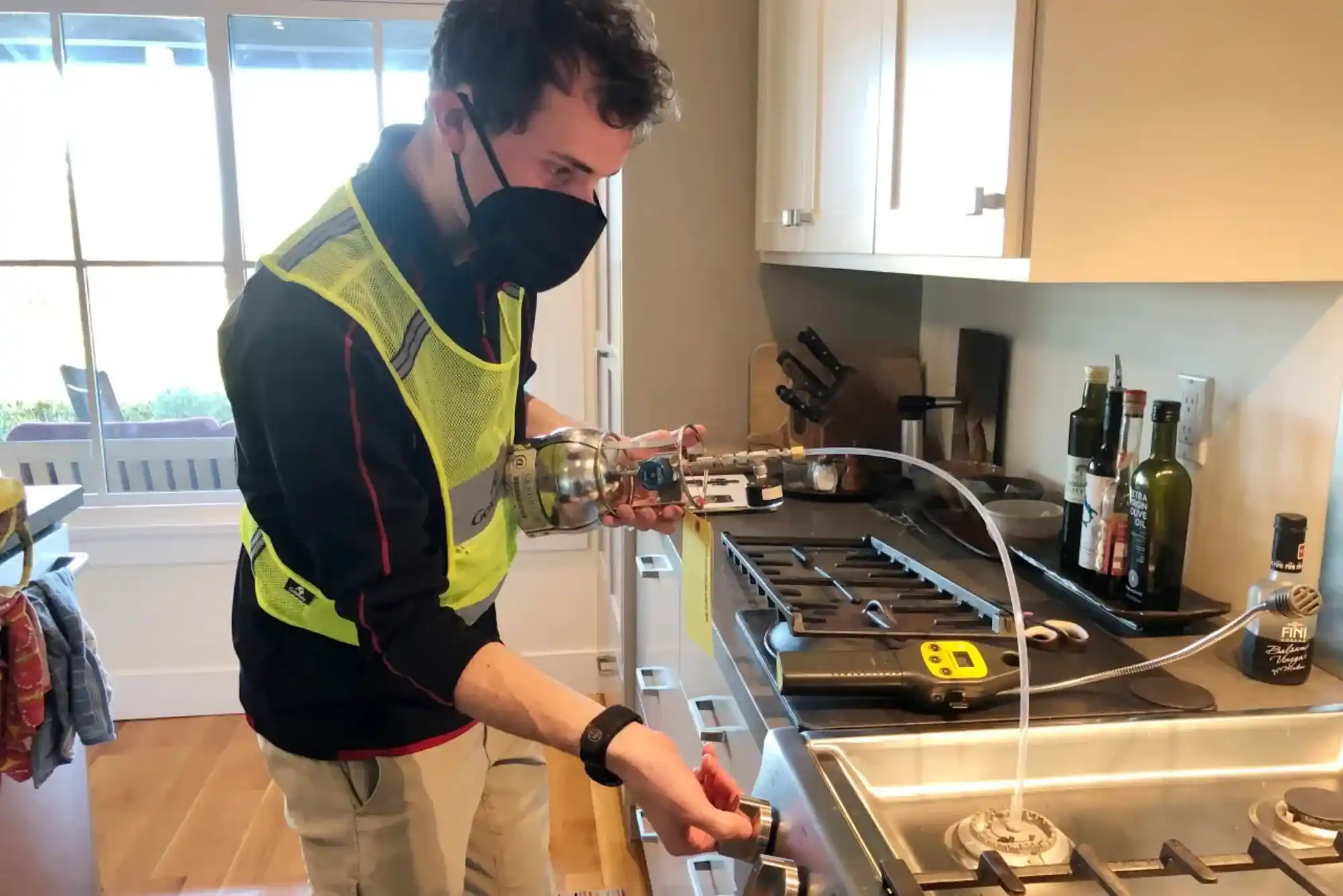
Modern detection tools provide more precise results. Handheld gas detectors alert homeowners to unsafe gas concentrations. Leak detection sprays form bubbles when applied to leaking areas, clearly showing the source of the leak. Pressure gauges can measure pressure loss in gas lines to identify hidden leaks. These tools greatly reduce the risk of undetected hazards and enhance safety.
DIY Precautions Before Repair
Homeowners can take temporary measures for minor leaks while waiting for professional help. Turning off the main gas valve immediately and avoiding lighting matches, using lighters, or operating electrical appliances near the stove are crucial. Opening windows and doors to ventilate the area and ensuring children, pets, and other vulnerable individuals are away from the vicinity are essential safety steps. These measures reduce immediate danger but do not replace professional repair.
Professional Stove Gas Leakage Repair
Repairing gas leaks requires technical expertise, as attempting it without proper knowledge can be extremely dangerous. Professional repair services follow strict protocols to ensure safety and efficiency. The process usually begins with a thorough inspection using specialized tools to locate the exact source of the leak. The gas supply is safely turned off, and the affected area is isolated.
Damaged pipes, valves, or burners are replaced with certified materials, and loose connections are properly tightened. Leak-proof sealing compounds may also be applied, followed by testing to confirm that no further leaks remain. Professional services not only repair the leak but also provide guidance on preventing future occurrences.
Maintenance Tips to Prevent Gas Leaks
Preventive maintenance significantly reduces the risk of leaks and prolongs the life of your stove. Regular inspections of pipes, connections, and burners can reveal early signs of damage. Scheduling professional servicing ensures that all components function correctly. Keeping the stove area clean prevents dirt or grease from affecting valves. Using certified, high-quality replacement parts maintains the integrity of the system. Addressing minor issues immediately prevents them from escalating into major hazards. These practices ensure efficient operation and minimize the likelihood of gas-related accidents.
Health Risks of Gas Leaks
Gas leaks are not only a fire hazard but also pose serious health risks. Prolonged exposure to leaking gas can lead to headaches, dizziness, nausea, fatigue, and respiratory problems. Inadequate ventilation may cause the release of carbon monoxide, a silent and potentially deadly gas. Recognizing these symptoms early and acting immediately can prevent severe health consequences and save lives.
Emergency Response for Gas Leaks
In case of a sudden or severe gas leak, immediate action is vital. The main gas valve should be turned off without delay, and windows and doors should be opened to disperse the gas. Electrical switches and appliances must be avoided, as even a small spark can ignite the gas. Evacuating all individuals from the premises ensures safety, and contacting certified stove gas leakage detection and repair professionals is essential. Quick and calm responses minimize the risk of fire or explosion and ensure everyone’s safety.
Benefits of Professional Gas Leakage Services
Certified technicians provide several advantages when it comes to stove gas leakage detection and repair. They offer safety assurance, accurate detection using advanced tools, long-term repairs using quality materials, and efficient service that saves time and effort. Their expertise ensures peace of mind, as homeowners can trust that the stove operates safely and reliably. Investing in professional services is ultimately an investment in safety, property protection, and family well-being.
Technological Advancements in Gas Leakage Detection
Modern technology has improved stove safety significantly. Smart gas detectors connect to mobile applications and provide real-time alerts. Automatic shutoff valves can immediately stop gas flow when a leak is detected, preventing accidents. IoT-based monitoring systems continuously observe gas pipelines and detect leaks even when homeowners are away. Adopting these innovations enhances safety and reduces reliance solely on manual inspections.
Gas stoves provide convenience and efficiency, but the risks associated with gas leaks cannot be ignored. Stove gas leakage detection and repair is essential for every household. Early detection, professional repair, and preventive maintenance collectively ensure a safe, efficient, and hazard-free kitchen.