When you step into a modern kitchen, one of the quiet but powerful technologies working behind the scenes is the oven fan. While often overlooked, this component is central to the way heat is managed inside the oven cavity. The way fans distribute hot air not only impacts how quickly food cooks, but also how evenly it comes out. In professional kitchens and home appliances alike, fans bridge the gap between raw heat and culinary precision.
Understanding the role of oven fans in heat distribution requires a closer look at how ovens generate heat, the physics of airflow, and the culinary implications of even cooking. From conventional ovens to convection and modern smart appliances, the science behind fans reveals why they are indispensable in food preparation today.
Heat Transfer in the Oven Environment
To appreciate the role of fans, it is important to first understand the three primary methods of heat transfer: conduction, radiation, and convection. Traditional ovens rely heavily on conduction from the heated surfaces of trays and pans, and radiation from heating elements. However, without proper air movement, hot and cold pockets inevitably develop inside the chamber.
This unevenness means food placed in different areas can cook at different speeds, a frustration that every cook has faced at some point. The introduction of fans changes the dynamic by enhancing convection—the transfer of heat through the movement of air molecules. By circulating air, the fan reduces stratification, where heat rises to the top while cooler air lingers below, and ensures a more homogeneous cooking environment.
The Evolution of Oven Fans
Oven fans became more common in the mid-20th century, coinciding with the rise of electric ovens. While gas ovens were excellent at generating high heat, they were more prone to temperature fluctuations and hotspots. Adding a fan brought predictability and consistency, features increasingly demanded by home cooks and food service professionals.
The earliest designs were simple, often a single fan placed at the back of the oven. Over time, manufacturers introduced improvements such as multiple fans, variable speeds, and even reverse fan functions. Today’s premium ovens may feature advanced sensors linked to fan systems, capable of adjusting airflow in real time based on the dish being prepared.

The Science of Air Circulation
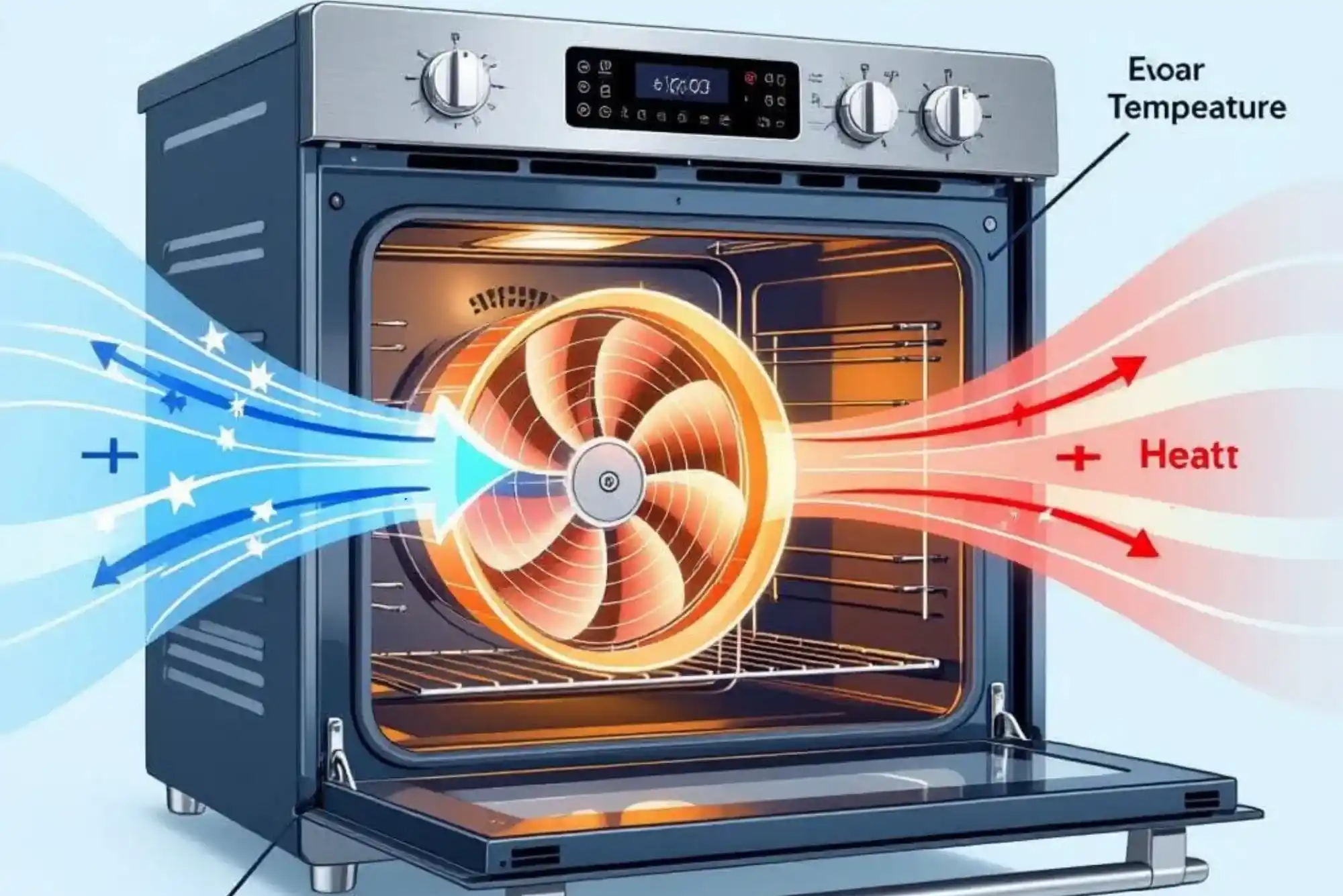
The core function of the oven fan is to maintain steady air movement within the cavity. As the fan rotates, it pushes hot air across racks and food surfaces, displacing cooler air and eliminating stagnant zones. This consistent flow equalizes temperature throughout the oven chamber.
Air circulation is particularly important because of the thermal lag in dense foods. Items like roasts or casseroles hold cold centers for longer periods. A stable and even stream of hot air ensures these foods cook uniformly, preventing overcooked exteriors paired with underdone interiors. The physical principle at work is forced convection, which accelerates the rate of heat transfer compared to natural convection, where air moves solely due to density differences between hot and cool pockets.
Cooking Efficiency and Energy Use
Another benefit of oven fans is the reduction in cooking times. Because the fan distributes heat more effectively, recipes often require lower temperatures or shorter durations when using convection settings. This not only saves energy but also preserves certain food qualities, such as moisture in meats or delicate textures in baked goods.
The efficiency extends to preheating as well. Ovens with fan-assisted heating often reach the target temperature faster, as the fan prevents thermal layering inside the cavity. For busy households and commercial kitchens alike, these time savings are significant.
Food Quality and Texture Outcomes
From a culinary perspective, oven fans contribute directly to food quality. Consider baked goods: cakes, pastries, and bread depend on even heat exposure for consistent rise, browning, and texture. Without airflow, a loaf might dome in the center or remain pale on one side. With proper circulation, the Maillard reaction—the browning process that creates flavor and aroma—occurs more evenly across surfaces.
For proteins like poultry or beef, fans help achieve crisp, golden skin while ensuring the meat cooks through to safe temperatures. Even in vegetable roasting, fans enhance caramelization while maintaining a balance between tenderness and surface crunch. In essence, fans elevate food from merely cooked to professionally finished.
Modern Oven Innovations
The role of fans has expanded with innovations in appliance design. Many modern ovens feature true convection systems, where a fan works in conjunction with an additional heating element placed near it. This configuration ensures that air pushed into the cavity is already heated, improving precision.
Some ovens allow the fan to be toggled on or off, giving cooks flexibility depending on the recipe. For instance, certain delicate pastries or custards benefit from still air, where a strong draft might disrupt their structure. Smart ovens now integrate algorithms that adjust fan speed automatically, tailoring heat distribution to specific foods. These advancements show how central fans have become in the pursuit of culinary perfection.
Challenges and Limitations
While fans are highly beneficial, they are not universally suitable for all types of cooking. For example, soufflés or certain cheesecakes may collapse under the force of moving air. In these cases, traditional still-air ovens or fan-off settings remain preferable. Additionally, fan noise can be a minor inconvenience in otherwise quiet kitchens.
There is also the matter of learning curves. Recipes often provide specific instructions for convection ovens, requiring adjustments in temperature and timing. Without these adaptations, food can dry out or overcook. Therefore, understanding how to harness the power of oven fans is as much about user education as it is about technology.
Future Directions in Oven Fan Technology
Looking forward, oven fan design is expected to become even more refined. Manufacturers are exploring variable geometry fans, where blade angles shift to optimize airflow. Coupled with sensors measuring humidity, temperature, and food progress, ovens of the future may deliver an unprecedented level of precision.
Integration with connected kitchen ecosystems is also likely. Imagine an oven that communicates with a recipe app, automatically setting fan speed and direction for optimal outcomes. Such innovations align with broader trends in smart appliances, where convenience, efficiency, and customization converge.
A Small Component with Big Impact
Oven fans may appear to be minor components, but their impact on heat distribution and food quality is profound. By ensuring even cooking, reducing energy consumption, and enabling professional-level results, fans have become essential to modern kitchen technology.
From the physics of convection to the artistry of baking, their role embodies the union of science and culinary craft. As appliances continue to evolve, the humble fan will remain central—quietly spinning at the heart of every delicious dish.