Top Load Washing Machine Repair Service Dubai: Common Problems and Solutions
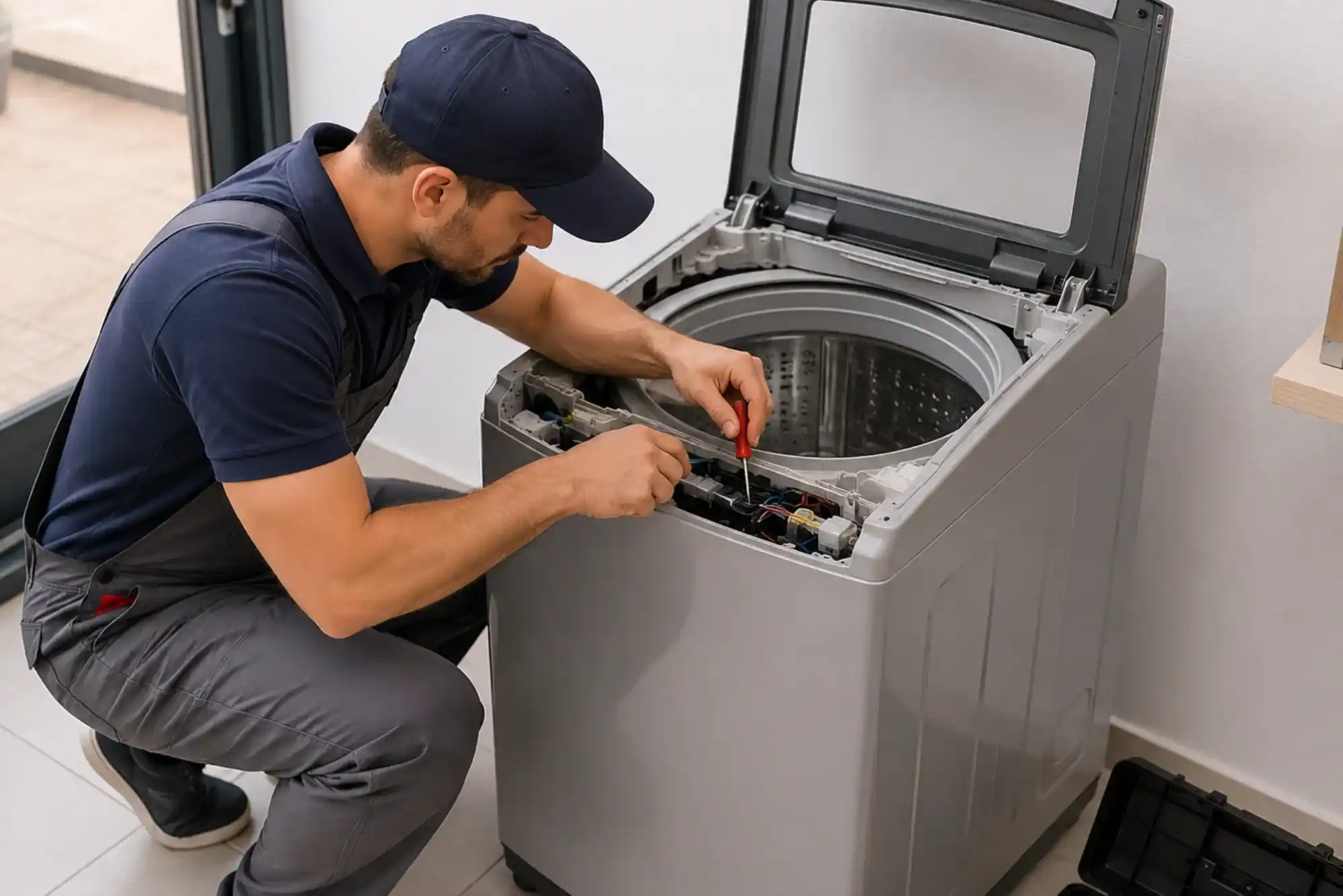
A top-load washing machine is designed to make laundry simple, but problems can quickly interrupt your routine. When the washer stops spinning, fails to drain, makes unusual sounds, or does not fill correctly, understanding the likely cause can help you decide what to do next. This guide explains common issues that may require top load washing machine repair, practical checks you can perform safely, and situations where professional service is the better option.
Many washer problems begin with relatively simple issues such as an unbalanced load, blocked hose, incorrect setting, or loose connection. However, repeated symptoms can also point to components such as the lid switch, drain pump, drive system, water inlet valve, suspension components, or control system.
Common Problems That Require Top Load Washing Machine Repair
Top-load washers use several mechanical and electrical components that must work together during filling, washing, draining, and spinning. A fault in one part can affect the entire cycle.
Washer Fails to Spin
If the machine fills and washes but does not enter the spin cycle, start by checking whether the load is badly unbalanced. Large items can collect on one side of the tub and cause the washer to stop or reduce spinning speed.
If redistributing the clothes does not solve the problem, the issue may involve the lid switch, drive components, motor, coupling, or another internal part. These components require proper diagnosis rather than replacing parts based only on symptoms.
Suspension components can also affect how a top-load washer behaves during operation. If the tub moves excessively or repeatedly becomes unbalanced, understanding the condition of the suspension system can be useful. A related guide on washing machine suspension rod replacement provides additional information.

Washer Is Not Draining
Water remaining inside the tub after a cycle is one of the most noticeable washer problems. A kinked drain hose, blockage, pump problem, or drainage restriction can prevent water from leaving the machine.
Before arranging service, switch the appliance off and inspect the visible portion of the drain hose for obvious kinks. Avoid dismantling electrical or internal components if you are not familiar with appliance repair.
A washer that repeatedly leaves water behind should not simply be operated through additional cycles. Continued use may make the problem worse or leave clothes sitting in stagnant water.
Washer Makes Excessive Noise
Some operating sounds are normal, particularly during agitation and high-speed spinning. However, loud banging, grinding, scraping, or repeated knocking deserves attention.
First check whether the appliance is level and whether the laundry is distributed evenly. If the noise continues with a balanced load, an internal mechanical problem may be responsible. Worn suspension components, drive parts, bearings, or other hardware can produce abnormal sounds depending on the washer design.
When Basic Troubleshooting Is Not Enough
Simple checks can sometimes resolve minor washer problems, but they cannot replace proper diagnosis. If a machine repeatedly develops the same fault, trips electrical protection, leaks water, produces burning smells, or stops during different stages of a cycle, professional inspection is advisable.
For homeowners looking for broader appliance assistance, washing machine repair services can provide a starting point for identifying the appropriate type of repair support.
It is also useful to distinguish between a one-time operating issue and a developing mechanical fault. A washer that becomes noisy only after an uneven load may need simple adjustment. A washer that becomes increasingly noisy over several cycles may require component inspection.
Signs You Should Arrange Professional Service
- The washer repeatedly stops before completing a cycle.
- The drum or tub moves excessively during spinning.
- Water remains inside after draining.
- The appliance leaks from underneath or around connections.
- The washer produces unusual electrical or burning smells.
- The same fault returns after basic troubleshooting.
For reliable diagnosis, the technician should identify the underlying cause rather than simply replacing the first component associated with the symptom. This approach can help avoid unnecessary repairs and restore the appliance more effectively.
How to Approach a Top Load Washer Repair
Once the symptoms are identified, the next step is determining whether the problem is related to installation, operation, drainage, water supply, or an internal component. A proper inspection should consider the complete wash cycle rather than focusing on one symptom alone.
Check the Washer Before Calling for Repair
- Pause the washer and check whether the laundry is evenly distributed.
- Confirm that the water supply is available and the hoses are not visibly kinked.
- Inspect the visible drain hose for obvious restrictions.
- Make sure the washer is standing level on a stable surface.
- Restart the appliance only if there are no signs of leakage, burning, or electrical damage.
If these basic checks do not resolve the problem, avoid repeatedly restarting the machine. A qualified technician can test the relevant components and determine whether the repair is mechanical, electrical, or related to the water system.
Repair or Replace: Which Option Makes Sense?
The decision between repairing a top-load washer and replacing it depends on several factors. The age and overall condition of the appliance, the nature of the fault, availability of replacement parts, and expected repair cost can all influence the decision.
| Situation | Repair May Be Practical | Replacement May Be Considered |
|---|---|---|
| Minor component failure | Usually worth diagnosing and repairing | Less likely to justify replacement alone |
| Repeated major failures | Consider the cumulative repair cost | May be more practical for an older appliance |
| Good overall appliance condition | Repair can extend useful service life | Replacement may not be necessary |
| Severe structural or major internal damage | Depends on repair cost and parts availability | Can be worth comparing with a new appliance |
Expert tip: Do not diagnose a washer solely from one symptom. For example, a machine that does not spin may have a problem with the lid switch, drive system, load balance, or another component. Proper testing helps identify the actual cause before parts are replaced.
Preventing Future Washer Problems
Regular care can reduce avoidable operating problems and help you notice developing faults earlier. Do not overload the washer, use the correct amount of detergent for the appliance and load, and follow the manufacturer’s recommendations for cleaning and maintenance.
Pay attention to changes in normal operation. A new vibration, unusual noise, slower draining, or repeated interruption during a cycle can be an early warning that something needs inspection.
For additional washer-care information, the washing machine service checklist can help homeowners understand the areas that may need attention during routine service.
When a washer needs more than basic troubleshooting, choosing an experienced appliance technician is important. A professional should inspect the symptoms, test relevant components, explain the problem clearly, and recommend a repair based on the appliance’s actual condition.
Homeowners who need local appliance support can also explore washing machine repair specialists for further service information.
Frequently Asked Questions
Why is my top-load washing machine not spinning?
An unbalanced load, lid-switch problem, drive-system fault, motor issue, or another mechanical problem can prevent spinning. Redistribute the clothes first; if the problem continues, professional diagnosis may be required.
Why does my top-load washer leave water in the tub?
A restricted drain hose, blockage, drainage problem, or faulty drain pump can cause water to remain in the tub. Visible hose problems can be checked safely, but internal pump work should generally be handled by a qualified technician.
Why is my washing machine shaking violently?
An uneven load or an appliance that is not level can cause excessive movement. If the washer remains unstable with a properly distributed load, suspension or other mechanical components may need inspection.
Should I repair an old top-load washing machine?
It depends on the appliance’s overall condition and the nature and cost of the repair. If the washer is otherwise reliable and the fault is limited to a repairable component, servicing it may make sense.
When should I stop using my washing machine?
Stop using the appliance if you notice burning smells, electrical issues, significant water leakage, severe abnormal noise, or repeated faults. Continuing to operate a damaged appliance can create additional problems.
Conclusion
Effective top load washing machine repair starts with understanding the symptoms and identifying their underlying cause. Problems such as failure to spin, poor drainage, excessive vibration, and unusual noise can have several possible explanations, so replacing parts without proper diagnosis is not always the best approach.
Basic troubleshooting can resolve simple issues, while recurring or more serious faults should be assessed by a qualified appliance professional. With sensible loading, routine care, and timely attention to unusual behavior, homeowners can keep their top-load washers operating more reliably and avoid allowing minor problems to become larger repairs.
Related Reading: Same Day Washing Machine Repair Service
Related Reading: Stove Appliance Repair Dubai
Related Reading: Washing Machine Repair Guide
Related Reading: Washer Repair Professionals in Dubai
Related Reading: Washing Machine Service Center Dubai
Related Reading: AC Compressor Replacement Service Dubai
Related Reading: Home Washing Machine Repair Service
Related Reading: Washing Machine Noise Problem Repair Service