Cooking may feel simple when you turn the knob, wait for the heat, and place your pan on the burner. Yet, many home cooks notice that food does not always cook evenly. One side of a pancake browns faster than the other, or a sauce bubbles only on one edge of the pot. These moments are often traced back to hot spots in the stove’s heating element. Hot spots are areas where more intense heat is generated compared to the rest of the surface, creating uneven cooking results. Understanding why they form requires examining the science of heat transfer, the design of stoves, the quality of cookware, and even how we use our appliances daily.
Heat Distribution and Its Limits
Every stove, whether powered by electricity or gas, is designed with an intention to distribute heat as evenly as possible. However, in practice, perfect heat distribution is nearly impossible. The process of converting energy into usable cooking heat involves resistance, combustion, or induction, and each system has natural inefficiencies. Electricity flowing through a coil does not always encounter uniform resistance. Flames from a gas burner do not always spread equally around the base of cookware. Even induction stoves, which are considered highly efficient, rely on magnetic fields interacting with the pan material, and any imperfections in that material can create localized heating.
The Science of Electric Coil Elements
For traditional electric stoves, coils are designed to convert electrical energy into heat through resistance. A metal wire inside the coil resists the flow of current, which generates heat that radiates outward. Over time, these wires may deteriorate, corrode, or shift slightly, changing the uniformity of resistance. The result is that certain parts of the coil heat faster and stay hotter. These irregularities manifest as hot spots, visible in cooking as uneven browning or faster boiling on one edge of the pan. Age is a key factor; older coils are far more prone to this problem because of repeated thermal expansion and contraction cycles that stress the metal.
Why Gas Burners Struggle with Even Flames
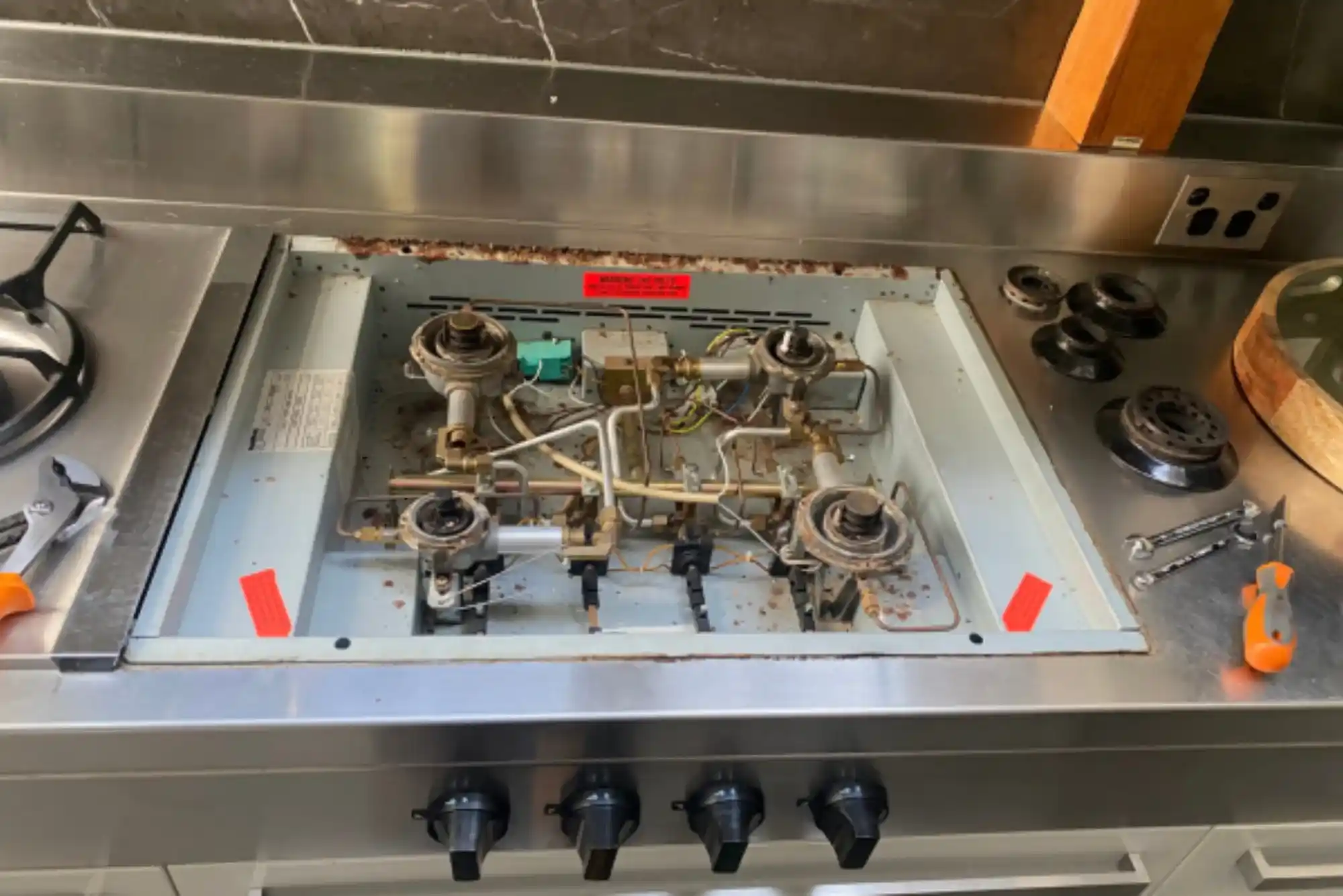
Gas stoves appear different because their heating comes from visible flames. Yet they also suffer from hot spots. The distribution of gas through the burner head depends on precisely manufactured holes. If these holes become blocked with food debris, grease, or carbon deposits, flames do not emerge uniformly. The pan may then receive more heat on one side. Moreover, the pan itself plays a role: a warped or thin-bottomed pan may not spread the heat effectively, causing localized overheating directly above the strongest flame outlets.
The Role of Induction Cooking
Induction cooktops are praised for their energy efficiency and rapid heating. Instead of directly generating heat in the stove, they create a magnetic field that induces electric currents within the cookware itself. While this eliminates some traditional hot spot issues, it introduces new ones. The cookware must be ferromagnetic and of sufficient quality to distribute heat evenly. If the base of the pan is too thin or inconsistent in composition, the induced currents may cluster in certain areas, producing hot zones. Thus, even advanced technology cannot completely eliminate the problem when external variables, such as pan design, come into play.
Wear and Tear Over Time
Repeated cycles of heating and cooling place physical stress on stove components. Metal expands as it heats and contracts as it cools. This constant movement eventually weakens the structural integrity of coils, burners, and support surfaces. Tiny fractures or shifts occur, altering the way heat is delivered. Even when invisible to the eye, these changes influence thermal distribution. Gas burners may warp slightly, causing flames to angle differently, while electric coils may sag, concentrating more heat in one section. This gradual degradation explains why a stove that once performed perfectly may later begin to show signs of uneven cooking.

Cookware as a Critical Factor
Although stove elements play a major role, cookware significantly amplifies or mitigates the perception of hot spots. A pan with a thin base, poor-quality metal, or warping will magnify uneven heat. Stainless steel without an aluminum or copper core may develop intense localized heating. Cast iron, while excellent at retaining heat, may take time to distribute it evenly, leaving initial hot spots until the entire surface stabilizes. The weight and structure of cookware therefore determine whether minor inconsistencies in the stove element become major obstacles in cooking.
Cleaning and Maintenance Issues
Hot spots sometimes result not from inherent flaws but from maintenance lapses. Burners caked with residue, coil elements coated in grease, or induction surfaces with scratches all affect how heat transfers. On gas stoves, blocked ports distort flame patterns. On electric ranges, residue under the coil prevents efficient heat spread. Induction surfaces covered with debris may prevent full contact with cookware. These preventable issues underline the importance of regular cleaning and proper maintenance, not just for hygiene but also for performance.
The Physics of Heat Conduction
Heat moves through conduction, convection, and radiation. On a stove, conduction through direct contact dominates. The stove must deliver energy into the pan, which then spreads it across the cooking surface. Hot spots appear when conduction is not uniform. This can be caused by uneven contact—such as a warped pan sitting slightly raised on one edge—or by varying thickness in materials. Even small air gaps reduce conductivity dramatically, creating pockets of reduced heating while adjacent areas overheat. The physics reveal that flat, well-constructed pans are just as vital as a well-functioning stove element.
The Human Element in Hot Spot Formation
User behavior also contributes to uneven heating. Turning the heat to maximum instantly places heavy stress on coils or burners, leading to quicker wear. Allowing food to spill repeatedly onto burners creates blockages. Even how cookware is positioned matters: a pot not centered on the burner will naturally expose one side to stronger heat. These daily practices, accumulated over years, accelerate the formation of hot spots and create cooking inconsistencies that might otherwise take far longer to appear.
When Hot Spots Become a Hazard
Hot spots are more than an inconvenience. They can become safety issues if ignored. Concentrated overheating risks damaging cookware, particularly nonstick pans, whose coatings may degrade under intense localized heat. In extreme cases, warped cookware can destabilize on the burner, posing burn risks. Additionally, for gas stoves, irregular flames may produce incomplete combustion, raising the risk of carbon monoxide release. What begins as a cooking nuisance may escalate into a matter of safety if maintenance is neglected.
Engineering Improvements and Limitations
Manufacturers continue to refine stove design to reduce hot spots. Modern electric stoves often use smooth glass-ceramic tops with radiant elements, which spread heat more evenly than traditional coils. Gas stoves incorporate advanced burner designs for broader flame coverage. Induction cooktops improve with multi-coil zones that adjust dynamically to pan size. Yet, despite these innovations, perfect uniformity remains elusive because of the inherent physical realities of heat transfer and the variability of cookware. Engineering can reduce but not completely eliminate the problem.
Practical Ways to Manage Hot Spots
While the physics and engineering may feel outside user control, practical steps can minimize hot spot issues. Investing in heavy-bottomed cookware with layered materials ensures better heat distribution. Regular cleaning of burners prevents blockages. Replacing aging coils before they deteriorate avoids performance decline. Learning to preheat pans gradually helps stabilize temperature distribution. Simple habits like centering cookware and avoiding extreme heat settings extend both the life of the stove and the evenness of cooking results.
Looking Ahead to Smarter Cooking Surfaces
Emerging technologies are exploring solutions to uneven heating. Some induction stoves already feature sensor systems that monitor pan temperature in real time and adjust energy delivery to avoid hot spots. Future smart cooktops may employ thermal imaging feedback, allowing automatic correction of heat distribution. While these innovations are not yet mainstream, they represent a direction where household appliances integrate greater intelligence to overcome fundamental thermal challenges.
A Balance of Design, Use, and Care
Hot spots on stove elements are not caused by a single factor but by a combination of physics, material science, appliance design, and human habits. Understanding why they occur helps cooks recognize that uneven cooking is not always the result of their technique. Instead, it is often the natural outcome of heat dynamics and the wear that stoves and cookware undergo over time. With awareness, proper maintenance, and quality cookware, these challenges can be managed effectively. Hot spots may never be eliminated completely, but they can be minimized, ensuring a more reliable and enjoyable cooking experience in every kitchen.