The relationship between household water quality and the efficiency of kitchen appliances is often underestimated. Among the many challenges that homeowners face, hard water ranks high due to its far-reaching effects. While its impact on washing machines, kettles, and plumbing fixtures is widely recognized, one less-discussed area of concern is the gas stove. Hard water plays a subtle yet significant role in affecting how gas stoves perform, age, and require maintenance. Understanding this link is crucial for ensuring longevity, safety, and cost-efficiency in daily cooking.
Understanding Hard Water and Its Mineral Load
Hard water contains elevated concentrations of dissolved minerals, primarily calcium and magnesium ions. These minerals, while harmless to human health, behave differently when subjected to heat or when they interact with metal surfaces. In the kitchen environment, where gas stoves operate under high heat and frequent exposure to steam, the accumulation of mineral residues becomes unavoidable.
When hard water evaporates during cooking, it leaves behind mineral traces that gradually deposit on burners, pan supports, and internal gas stove components. Over time, these deposits may accumulate to levels that compromise both the functional efficiency and safety of the stove. Unlike stains on sinks or faucets, which are cosmetic nuisances, deposits on gas stove components directly interfere with combustion and heat transfer.
Hard Water and Its Effect on Burner Efficiency
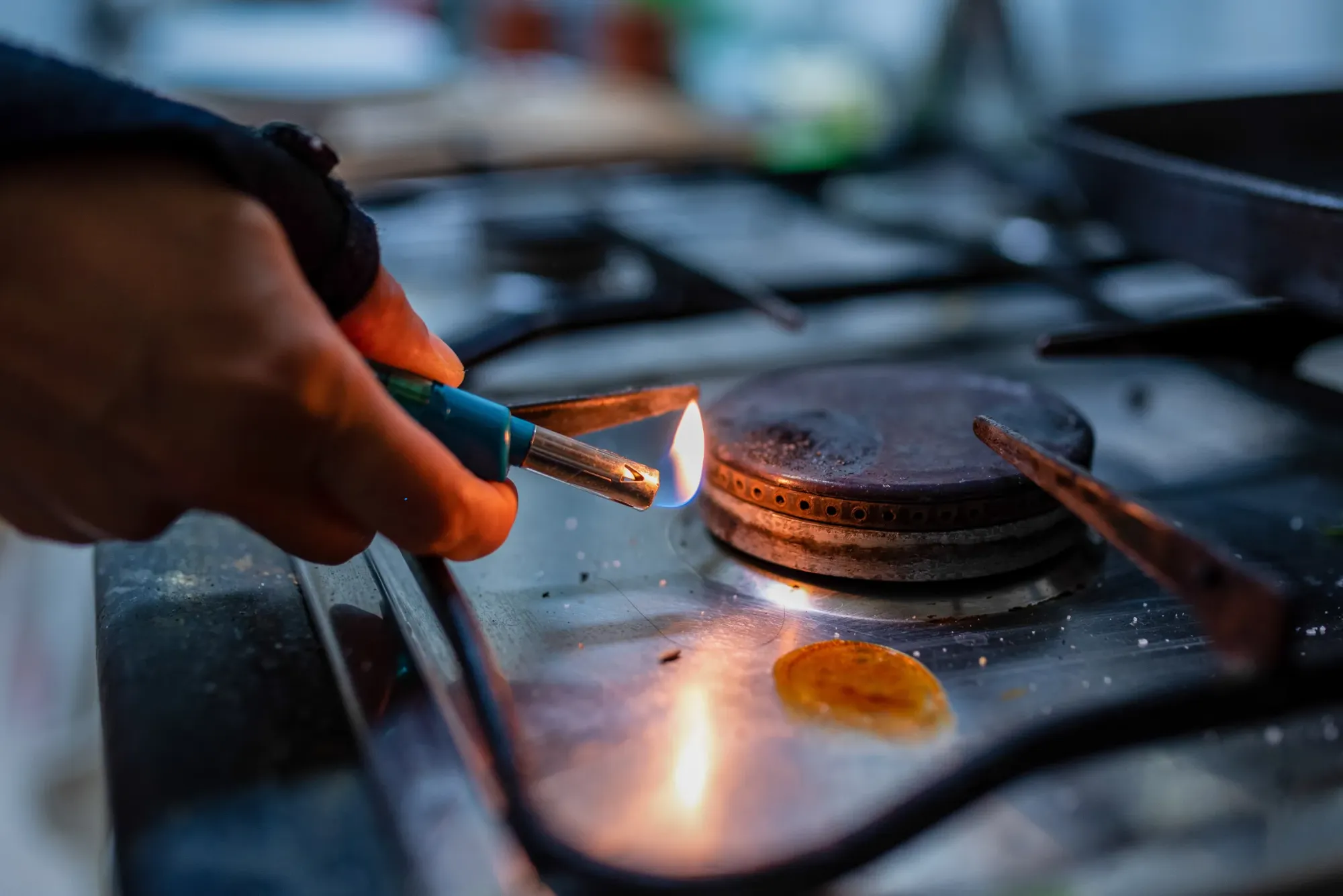
Burners are the heart of a gas stove, responsible for providing consistent flame and controlled heat output. However, when exposed to steam or splashes from cooking with hard water, burners begin to accumulate mineral layers. These layers often form stubborn white or chalky coatings that narrow gas outlet holes. The immediate effect is a disrupted flame pattern, which may appear uneven, weaker, or excessively yellow.
An inconsistent flame not only reduces cooking efficiency but also leads to incomplete combustion, a process that wastes fuel and can potentially produce harmful by-products such as carbon monoxide. Over time, users may notice that cooking takes longer, gas consumption increases, and the overall reliability of the stove diminishes.
Corrosion Risks Introduced by Hard Water Residues
Mineral deposits from hard water do more than just block outlets. They also create localized environments that accelerate corrosion. For example, calcium and magnesium deposits often absorb moisture, trapping it against the metal surfaces of burners and pipes. This constant exposure creates a microclimate where rust and pitting corrosion thrive.

This process is especially concerning for the structural integrity of metallic parts, including the burner caps, trivets, and internal gas pipes. Corrosion not only weakens these parts but may eventually lead to dangerous gas leaks. A stove exposed to prolonged mineral-induced corrosion could therefore pose a significant safety risk in addition to performance degradation.
Increased Maintenance Requirements and Costs
Households in regions with hard water often notice a higher frequency of gas stove maintenance. Service professionals report that stoves from such areas are more likely to require deep cleaning of burners and replacement of corroded parts. What begins as a minor inconvenience of scrubbing stubborn deposits eventually evolves into recurring maintenance bills.
In severe cases, burners become so clogged or corroded that they must be replaced entirely. For some homeowners, this may mean premature replacement of the entire appliance. Considering the costs of modern gas stoves, the financial burden of hard water’s impact should not be overlooked.
Gas Stove Aesthetics and Hygiene Challenges
Another dimension of hard water’s influence lies in its effect on aesthetics and hygiene. White spots, streaks, or cloudy films often appear on the glossy or stainless steel surfaces of gas stoves after repeated cooking sessions with hard water. These deposits dull the appearance of the appliance, making it look older and less well-maintained than it actually is.
From a hygiene perspective, hard water residues also tend to trap grease and food particles. The combination of minerals and organic matter creates stubborn stains that are difficult to clean with standard methods. Over time, this compromises not only the look of the stove but also its sanitary condition, an important consideration in food preparation spaces.
Heat Distribution and Cooking Performance
Cooking efficiency is not only about flame output but also about how heat is distributed across cookware. When burners become partially clogged due to mineral deposits, the flame pattern changes. Uneven flames fail to distribute heat properly, causing hot spots and cold spots on the pan surface.
This irregular heating results in inconsistent cooking outcomes. Delicate dishes that require uniform heat may be ruined, and everyday cooking may require additional time and adjustments. In households where cooking is frequent, these seemingly small inefficiencies accumulate into noticeable inconvenience, wasted time, and wasted fuel.
Long-Term Appliance Lifespan Reduction
Gas stoves are generally designed to last many years under normal conditions, but hard water exposure shortens this expected lifespan. The combined effects of burner clogging, corrosion, increased fuel consumption, and heightened maintenance eventually wear down the appliance prematurely.
Instead of serving a household for a decade or more, a gas stove exposed to untreated hard water conditions may require replacement within a few years. This accelerated depreciation places additional financial strain on households and increases the environmental impact due to the disposal and replacement cycle.
Mitigation Strategies for Households
Although the challenges posed by hard water are undeniable, solutions exist to mitigate its impact. Installing water softeners or point-of-use filtration systems helps reduce the mineral content in water used for cooking. Even simple measures such as wiping the stove dry after use or cleaning burners with vinegar solutions can slow the buildup of deposits.
Households can also schedule regular inspections and cleaning by professionals to ensure that burners remain unclogged and internal components are not compromised. These preventive steps may seem minor, but they significantly extend the lifespan of the appliance and safeguard household safety.
The Broader Perspective of Appliance-Water Interaction
The case of gas stoves highlights a broader reality: the quality of water in a household is not just a matter of taste or skin health, but also a determinant of appliance performance and durability. Hard water silently affects nearly every appliance it comes into contact with. By recognizing its impact on gas stoves, homeowners gain a clearer appreciation of the hidden costs associated with water quality.
Moreover, addressing hard water challenges contributes to sustainability. Appliances that last longer reduce waste, minimize resource use for replacements, and help households manage their energy consumption more efficiently. In this sense, improving water quality through treatment technologies is not merely a matter of convenience but also a step toward responsible resource management.
Protecting Gas Stoves from Hard Water Damage
Gas stoves are indispensable tools in the modern kitchen, relied upon daily for preparing meals. Yet their performance and lifespan are vulnerable to the silent but persistent effects of hard water. From burner clogging and corrosion to inefficient heating and aesthetic degradation, the challenges are multifaceted.
Awareness of these effects empowers households to take proactive measures, whether through water treatment, consistent cleaning, or professional maintenance. In doing so, homeowners can preserve the efficiency of their gas stoves, reduce long-term costs, and ensure that cooking remains safe and enjoyable.
Hard water may seem like a minor inconvenience, but when left unaddressed, it undermines the very heart of the kitchen. By tackling this issue directly, households not only safeguard their appliances but also create a more sustainable and cost-effective cooking environment for years to come.