An oven is one of the most essential appliances in any home, making cooking efficient and enjoyable. However, when an oven starts tripping the circuit breaker, it can disrupt your household routine and even pose safety risks. A breaker trip is a protective measure that prevents electrical overloads or short circuits, but if your oven repeatedly causes this issue, it is a clear indication of an underlying problem. Repairing an oven that trips the breaker requires a proper understanding of the root cause, careful troubleshooting, and sometimes professional assistance to ensure the appliance works safely and reliably.
Understanding Why Breakers Trip
A circuit breaker is designed to protect your home’s electrical system from damage caused by overloading or electrical faults. When an oven trips the breaker, it means the circuit is experiencing more current flow than it can safely handle. This may happen if the oven’s wiring is damaged, if the heating element is malfunctioning, or if an internal component is creating a short circuit. Sometimes the cause is external to the oven, such as an issue with the wall socket or breaker itself. If the breaker is undersized or already powering too many appliances, the oven’s power demand may exceed the safe limit and force the breaker to shut off.
Common Causes of Oven Breaker Trips
One of the most frequent reasons for oven breaker trips is a faulty heating element. Heating elements endure constant exposure to high heat, and over time, cracks or burns may develop. When an element becomes damaged, it may begin to leak current to the oven’s body or short out when power is applied, which leads to a breaker trip.
Another common cause is damaged electrical wiring. Inside an oven, wires connect heating elements, thermostats, switches, and controls. If these wires become loose, frayed, or burnt, they can create sparks or electrical surges that instantly trigger the breaker.
Sometimes the problem lies outside the oven itself. If your oven is connected to a circuit that already powers other high-demand appliances such as refrigerators, dishwashers, or microwaves, the combined electrical load may exceed the breaker’s capacity, causing it to trip.
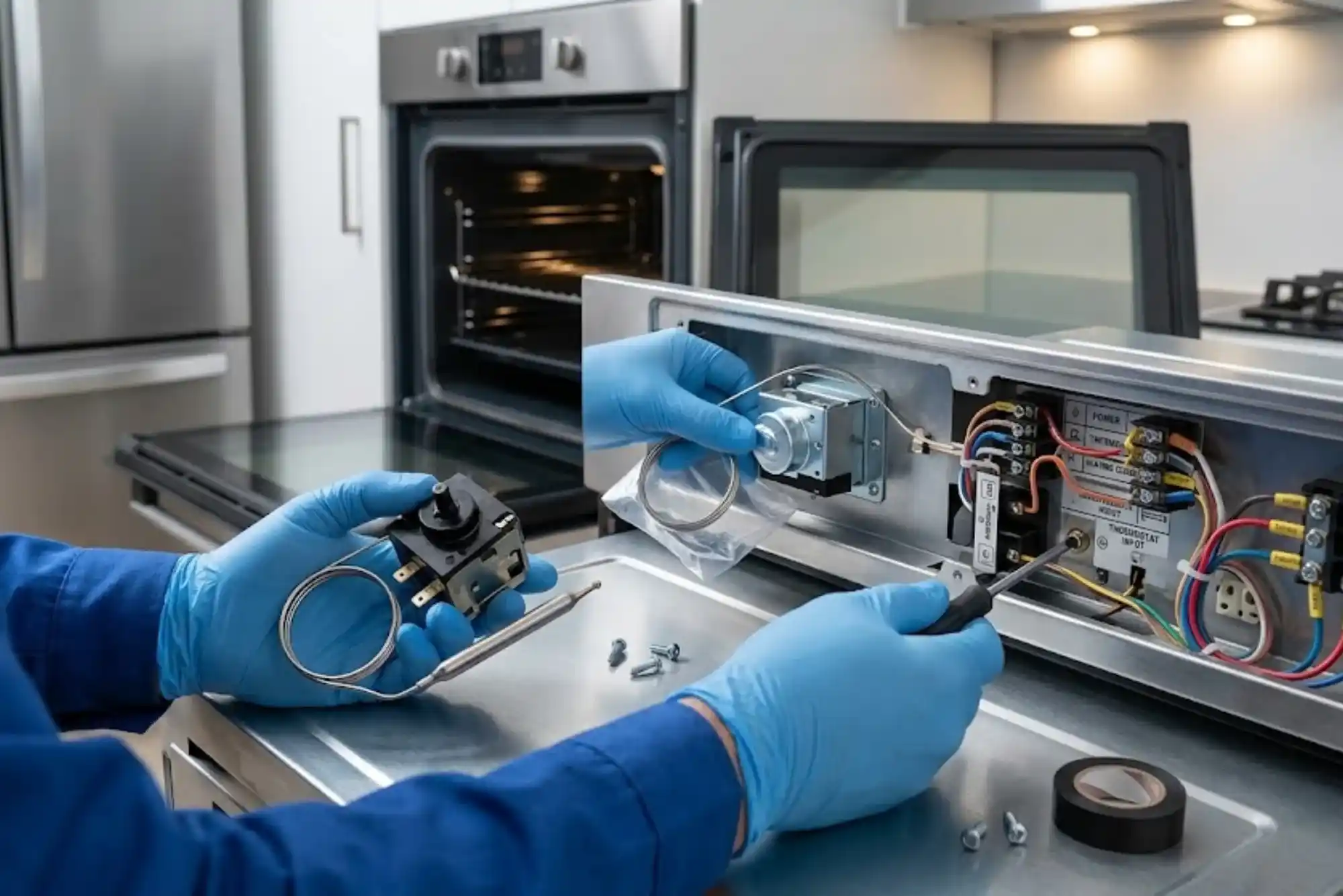
Faulty control components such as thermostats or selector switches may also cause breaker trips. The thermostat controls oven temperature, and if it malfunctions, it may demand more current than the circuit can safely provide. Similarly, a defective switch or timer may disrupt the current flow.

Finally, the problem could be the breaker itself. An old, weak, or undersized breaker may not provide the proper amperage for the oven. Ovens usually require a dedicated circuit with sufficient capacity, and if this is missing, the breaker may trip even when the oven is functioning normally.
Safe Troubleshooting Before Repairs
Before attempting repairs, it is important to take safety precautions. The first step is to completely disconnect the oven from its power supply. Working on an oven while it is still connected to electricity can result in serious shock or even fire. After disconnecting, check for any obvious signs of electrical damage such as a burnt smell, melted wiring, or sparks.
Examine the heating elements carefully, as visible cracks or burn marks may confirm that the element is damaged. Inspect the power cord and plug for wear and tear, since a frayed cord can also cause a breaker trip. If possible, try plugging the oven into a different dedicated circuit to see whether the issue persists, which will help determine whether the problem lies in the oven or in the electrical system of the house.
Professional Repair Solutions
Once the source of the problem is narrowed down, professional repair becomes the most effective solution. A trained oven repair technician begins with a detailed diagnosis using tools such as a multimeter to measure continuity and resistance. This helps identify whether the heating elements, thermostat, wiring, or switches are at fault.
If a heating element is identified as defective, it is replaced with a compatible new part. Replacing a damaged element restores proper heating performance and prevents electrical surges that could trip the breaker.
If the wiring is found to be faulty, the technician will replace burnt or damaged wires with heat-resistant electrical wiring designed for ovens. Connectors, terminals, and junction points are tightened or replaced to ensure safe and efficient current flow.
When control components such as thermostats, switches, or timers are responsible, they are replaced with manufacturer-approved parts. Repairing these components ensures the oven can regulate temperature correctly and operate without electrical stress.
In cases where the oven itself is working correctly but still trips the breaker, the technician may recommend upgrading the electrical circuit. This could mean installing a dedicated circuit exclusively for the oven or replacing an undersized breaker with one that has the proper capacity.
Why Professional Help Is Important
While some basic troubleshooting can be done by homeowners, repairing electrical faults in an oven is a complex and risky process. Professional technicians have the training, tools, and knowledge to handle high-voltage appliances safely. Their experience allows them to quickly identify the exact cause of the problem rather than relying on guesswork.
Professional repair also ensures that safety standards are followed, preventing risks of fire, electrical shock, or repeated failures. Technicians use quality replacement parts approved by the manufacturer, ensuring long-term reliability. Many repair companies also provide warranties on their work, giving homeowners confidence that the repair will hold up over time.
Preventing Future Breaker Trips
After repairing the oven, it is important to take preventive measures to avoid similar problems in the future. Always ensure the oven is connected to a dedicated circuit, as sharing a breaker with other appliances increases the risk of overload. Avoid using multiple high-power appliances simultaneously on the same electrical line.
Scheduling regular professional maintenance helps identify potential problems before they escalate. During servicing, technicians inspect wiring, elements, and control components, replacing worn-out parts before they fail. Keeping the oven clean also reduces risks, since grease and residue can sometimes affect wiring insulation. If a component shows early signs of wear, replacing it promptly rather than delaying repairs prevents larger electrical problems.
When to Replace Instead of Repair
Although repairing the oven is often possible, there are cases where replacement is a better option. If the oven is more than a decade old and requires frequent repairs, investing in a new model may be more cost-effective in the long run. Modern ovens are designed with better energy efficiency, advanced safety features, and improved temperature control. If critical components such as the control board or multiple heating elements fail at once, the cost of repair may approach the price of a new oven, making replacement the smarter choice.
Final Thoughts
An oven that continually trips the breaker is more than just an inconvenience. It is a warning sign of underlying electrical issues that require attention. Whether the problem is a faulty heating element, damaged wiring, a malfunctioning thermostat, or an overloaded circuit, identifying and repairing the root cause is essential to restore safe operation.
While homeowners can perform initial checks such as inspecting the elements and power cord, professional oven repair is often necessary to ensure a lasting solution. Experienced technicians not only repair the problem but also provide valuable advice on preventing future issues.
By addressing the issue promptly and taking preventive steps, you can extend the life of your oven, protect your electrical system, and enjoy uninterrupted cooking without the risk of electrical hazards. If your oven keeps tripping the breaker, do not ignore the problem. Seek expert repair services to restore both safety and convenience to your kitchen.