A dishwasher is one of the most convenient appliances in any modern kitchen, designed to save both time and effort. However, like all appliances, it can occasionally run into problems, and one of the most common issues is poor drainage. When a dishwasher does not drain properly, dirty water can collect at the bottom, leaving dishes unclean and causing unpleasant odors. Understanding how to troubleshoot dishwasher drainage issues is essential for both homeowners and service professionals. By identifying the cause of the problem and taking the right steps to fix it, you can restore your appliance’s performance and avoid costly repairs.
Understanding the Dishwasher Drainage System
To troubleshoot a drainage problem effectively, it helps to understand how the dishwasher drainage system works. Inside the appliance, water enters through a fill valve, is sprayed over the dishes via rotating spray arms, and then drains out through a drain hose connected to the sink or garbage disposal. The pump plays a key role in forcing wastewater out of the dishwasher and into the drainage system. If any part of this cycle is disrupted—whether due to a blockage, mechanical failure, or improper installation—the dishwasher may fail to drain completely.
Common Causes of Dishwasher Drainage Issues
There are multiple reasons why a dishwasher might struggle to drain. In many cases, the issue stems from a clogged drain hose, filter, or garbage disposal connection. Food particles, grease, and soap residue can build up over time, restricting water flow. Sometimes, the problem may be caused by a faulty drain pump or a malfunctioning check valve that prevents water from flowing in the right direction. Improper installation, such as a drain hose without a high loop or air gap, can also lead to drainage problems.
Initial Checks Before Troubleshooting
When you notice that your dishwasher is not draining, the first step is to turn off the appliance and disconnect it from the power supply. This is not only a safety precaution but also allows you to inspect the appliance without risk. Check if the water in the bottom is standing after the cycle has finished. If there is a small amount of water left, it may be part of normal operation, as some models retain a bit of water to keep the seals from drying out. However, if there is a significant amount, troubleshooting is necessary.
Inspecting and Cleaning the Filter
One of the most common culprits in drainage problems is a dirty filter. The filter is designed to trap food debris and prevent it from entering the drain pump. Over time, it can become clogged with particles, reducing water flow. To clean it, remove the bottom rack of the dishwasher, locate the filter assembly, and rinse it thoroughly under running water. Use a soft brush if necessary to remove stubborn debris. Ensuring that the filter is clean can often restore proper drainage without further repairs.
Examining the Drain Hose
If cleaning the filter does not resolve the problem, the next step is to inspect the drain hose. This flexible tube connects the dishwasher to the sink drain or garbage disposal. Over time, it can become kinked or clogged with debris, which prevents water from passing through. Disconnect the hose carefully and check for blockages by running water through it. If you find any buildup, flush it out completely before reconnecting. Additionally, make sure the hose is positioned with a high loop or air gap to prevent backflow of dirty water into the dishwasher.

Checking the Garbage Disposal Connection
For dishwashers connected to a garbage disposal, the drainage issue could be as simple as a blocked or improperly installed connection. If the garbage disposal is new, a knockout plug may still be present in the inlet where the dishwasher drain hose connects. This plug must be removed to allow water to pass through. Even if the knockout plug is not the problem, the garbage disposal itself can become clogged with food waste, restricting water flow from the dishwasher. Running the disposal for a few seconds can sometimes clear minor obstructions.
Inspecting the Drain Pump
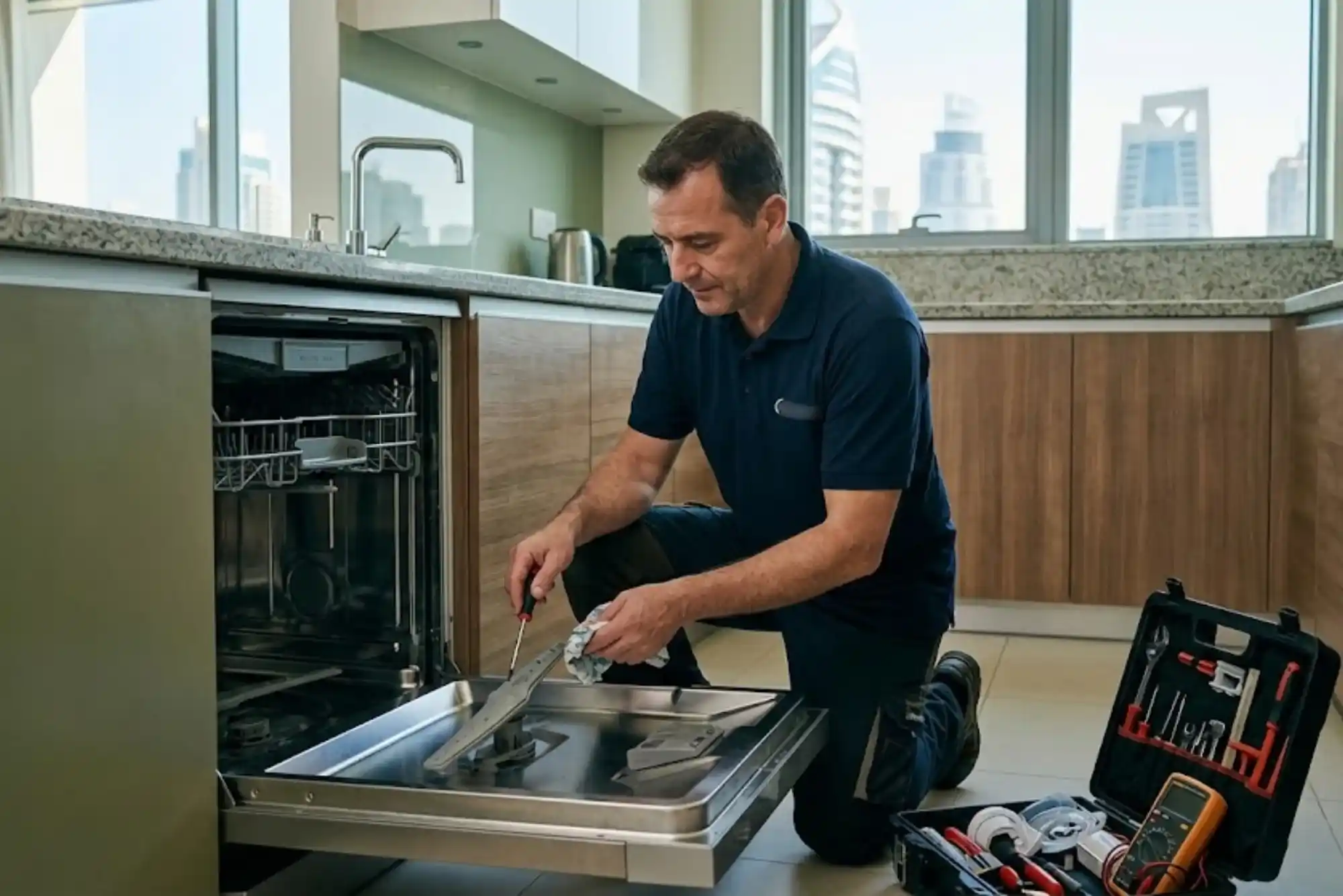
If the filter, drain hose, and garbage disposal connection are all clear, the issue may lie with the drain pump. This component is responsible for pushing wastewater out of the dishwasher. A malfunctioning pump can result from a jammed impeller, electrical failure, or worn-out motor. To inspect the pump, you may need to remove the dishwasher’s lower front panel and check for obstructions. Small pieces of glass, food, or plastic can sometimes get lodged in the pump, preventing it from operating properly. If the pump is damaged or electrically faulty, replacement may be necessary.
Testing the Check Valve
The check valve prevents drained water from flowing back into the dishwasher. If this valve is stuck or defective, it can cause water to remain inside the appliance after a cycle. The check valve is often located near the pump assembly. Inspect it for signs of damage, wear, or debris. If the valve is not sealing properly, replacing it can restore normal drainage.
Electrical and Control Board Considerations
In some cases, the drainage problem may not be mechanical but electrical. A faulty timer, control board, or wiring connection can prevent the pump from receiving power at the right time in the cycle. Troubleshooting electrical components requires a multimeter and knowledge of appliance wiring. If you are not experienced in electrical diagnostics, it is best to leave this step to a qualified technician to avoid safety hazards.
Preventing Future Drainage Problems
Once you have resolved the issue, taking preventive measures can help avoid future problems. Always scrape excess food from dishes before loading them into the dishwasher, even if your model has a built-in food grinder. Avoid overloading the racks, as this can block spray arms and reduce cleaning efficiency. Regularly clean the filter and run a dishwasher cleaning cycle with a specialized cleaner or vinegar to dissolve grease and mineral buildup. Check the drain hose position periodically to ensure it remains free from kinks and properly elevated to prevent backflow.
When to Call a Professional
While many dishwasher drainage issues can be resolved with basic troubleshooting, some problems require professional intervention. If you have inspected and cleaned all accessible parts but the dishwasher still does not drain, it may be due to a more complex issue such as a damaged pump motor, a control board fault, or internal wiring damage. Professional technicians have the tools and expertise to diagnose and repair these problems efficiently, often saving you time and money compared to trial-and-error repairs.
A dishwasher that fails to drain can be frustrating, but with a systematic approach, the problem is often easy to identify and fix. By understanding the common causes, inspecting key components like the filter, drain hose, and pump, and taking preventive steps, you can keep your dishwasher running smoothly for years to come. However, if the issue persists after thorough troubleshooting, seeking professional help ensures that the appliance is restored to full working order without causing further damage. Regular maintenance and careful use remain the best strategies for avoiding drainage issues altogether.